Home › Commercial Retaining Walls
We construct commercial masonry retaining walls in Detroit, MI for parking lots, loading areas, and site grading. Working from engineered plans, we build CMU and block walls with proper drainage, reinforcement, and durable finishes that withstand heavy use.
Superior Masonry Detroit provides professional commercial masonry retaining walls throughout Detroit, MI, Michigan and the surrounding area. Our licensed, insured crew delivers safe, clean, on-time work with a free estimate before anything begins. Call (313) 464-0145 or request your free quote.
Commercial masonry retaining walls built for Detroit properties
Superior Masonry Detroit designs and builds commercial masonry retaining walls that handle real Detroit conditions: freeze-thaw cycles, heavy snow loads, salt exposure from plowing, and saturated clay soils near the river. Our focus is on walls that do not move, lean, or crack under day-to-day use.
We work on office parks, apartment complexes, industrial yards, retail centers, schools, and municipal sites throughout Detroit and nearby suburbs. Whether you need a short wall to clean up a parking lot drop-off or a multi-tiered system to hold back a steep grade behind a building, we plan the structure around your site conditions, not a generic detail pulled from a catalog.
From the beginning, we talk about function first: are you trying to stop erosion, gain extra parking, create loading access, protect a building foundation, or improve appearance along a public sidewalk? Once we know that, we recommend wall type, materials, and drainage details that fit your use, your budget, and the City of Detroit requirements.
How we design a commercial retaining wall that will not fail
Commercial masonry retaining walls start with numbers and soil, not just blocks and mortar. Before we quote a project, Superior Masonry Detroit reviews site grading plans (if available), checks existing utilities, and looks at soil type and groundwater patterns. For walls over a certain height or walls that support traffic or structures, we can coordinate with a structural engineer or use your engineer’s stamped design, which is often required for permits in Detroit.
Key design points we address:
• Wall height and surcharge loads. A wall that holds back a sidewalk is different than one holding up truck traffic, dumpsters, or a parking lot. We size the footing, block type, and reinforcement for the actual loads.
• Soil and drainage conditions. Detroit sites often have heavy clay that holds water. We plan gravel backfill, perforated drain pipe, and weep holes where needed so water pressure does not build behind the wall.
• Frost and heave. Our foundations are set below local frost depth and we detail base preparation so the wall does not lift or tilt in winter.
• Aesthetics and public exposure. For walls facing customers, tenants, or a public street, we choose facing units, caps, and alignment that fit the look of the property and meet any corridor or streetscape standards.
We prepare a clear scope showing wall alignment, approximate elevations, and construction sequence so your facilities team, GC, or property manager knows exactly what to expect before we break ground.
Material options for commercial masonry retaining walls
There is no single “standard” commercial wall. Superior Masonry Detroit walks you through the pros and cons of realistic material options for Southeast Michigan, including cost, appearance, and maintenance.
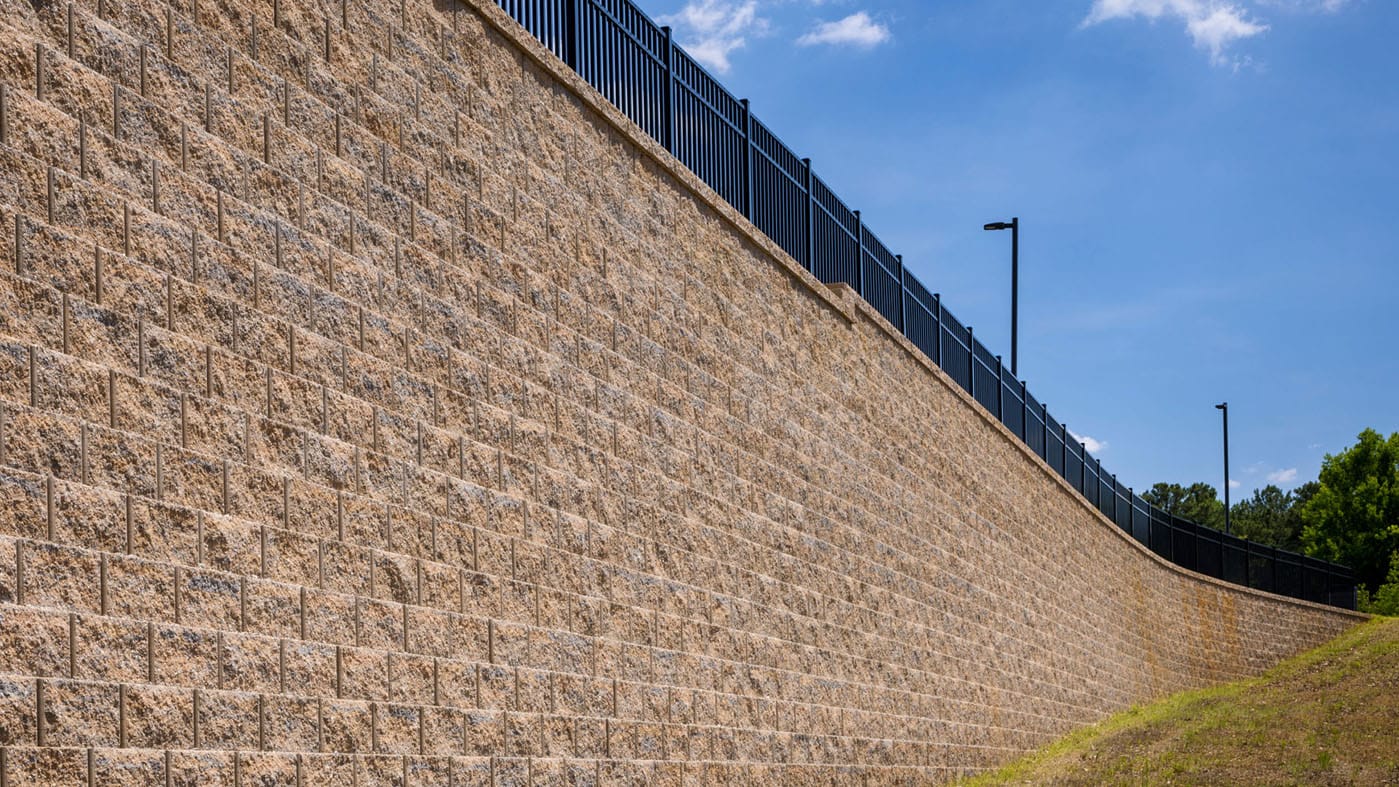
Segmental concrete retaining wall systems (SRWs). These modular block systems are common for commercial sites because they install relatively quickly, allow curves and steps, and look clean for years. Depending on wall height and loads, we may include geogrid reinforcement layers that extend back into the soil to hold the system together. Many Detroit parking lots and shopping centers use this style for grade changes and signage platforms.
Cast-in-place concrete with masonry veneer. For tight urban sites or walls supporting heavy structures, we may recommend poured concrete with rebar, then add a brick or stone veneer to match existing buildings. This costs more than basic block but is very strong and often preferred near loading docks and foundations.
Concrete block (CMU) retaining walls. For service areas that are not public facing, CMU with proper reinforcement, waterproofing, and drainage can be a solid choice. It is often used for interior grade changes inside industrial buildings or behind factories.
Natural stone or boulder walls. Less common on large commercial work due to engineering limitations, but sometimes appropriate for low walls, landscape features, or where a more natural look is desired. We explain where these are appropriate and where they are not, based on code and safety concerns.
We help you match materials to how close vehicles will be, whether pedestrians will sit or walk along the wall, any local design standards, and your long term maintenance expectations.
Step-by-step process: from site walk to final inspection
Our commercial retaining wall process is structured so your operations experience as little disruption as possible.
1. Site visit and assessment. A Superior Masonry Detroit foreman or estimator meets you on site to review access routes, existing grades, drainage patterns, and any problems you have seen such as washouts, ponding, or cracks. We take measurements, photos, and note utility locations.
2. Proposal and design coordination. We provide a written proposal with a clear scope, material types, and allowances for drainage and excavation. For engineered walls, we coordinate with your engineer or, if requested, bring in an engineer familiar with Detroit permitting standards.
3. Permits and approvals. In Detroit, most substantial retaining walls, particularly over 4 feet or supporting structures, require permits. We assist with drawings and documentation for the City of Detroit Buildings, Safety Engineering and Environmental Department. If your site is in a corridor with design guidelines or has HOA or corporate design standards, we help package material samples or specification sheets for review.
4. Site preparation and excavation. We schedule work around your business operations, blocking off only the areas we need. Old failing walls are demolished and removed, utilities are located and protected, and we excavate to the required depth and width for the base and backfill.
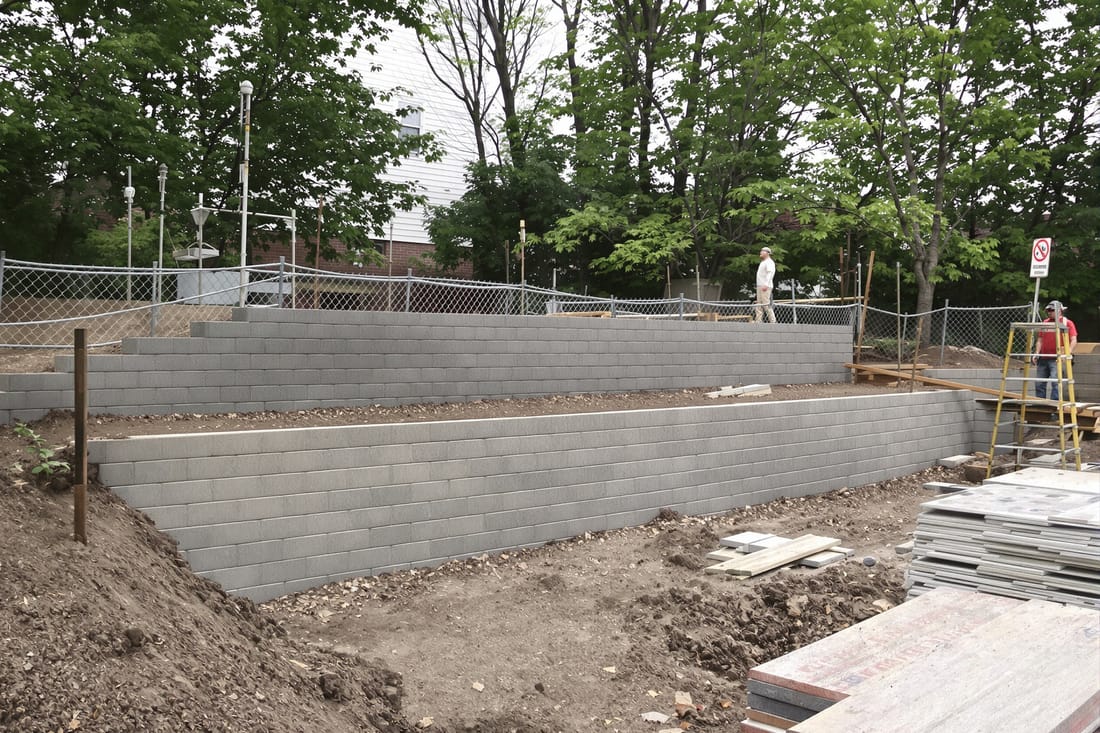
5. Base, drainage, and wall construction. We install compacted aggregate base, set leveling courses, install drain tile and outlet locations, then build the wall in lifts. For reinforced or engineered walls, we place rebar, geogrid, or tiebacks exactly as shown on the plans.
6. Backfilling, compaction, and cleanup. We backfill using appropriate materials, compact in thin lifts, and restore disturbed areas with topsoil, seed, asphalt, or concrete, depending on the site. Before leaving, we check drainage outlets and final grades so water sheds away from the wall and your building.
7. Final walkthrough. We walk the project with your representative to confirm the work matches the agreed scope and discuss simple maintenance steps that will help the wall last its full design life.
What affects cost and timeline for a commercial wall in Detroit
Costs for commercial masonry retaining walls vary widely, and we are upfront about the real drivers so you can budget accurately.
Access and staging. Tight urban lots, limited laydown space, or the need to work around live traffic and tenants can slow production and require smaller equipment. We factor this in at the estimate stage so there are no surprises later.
Wall height and loading. A 3 foot landscape wall is very different in cost than a 10 foot wall holding up a parking lot with snow piles. Taller walls usually require engineering, geogrid or tiebacks, heavier units, and more substantial drainage systems, which all affect price.
Soil conditions and removals. Soft or wet soils, buried debris, or the need to remove a failed existing wall add time and trucking costs. Many older Detroit sites, especially industrial or former manufacturing properties, have unexpected buried concrete or fill that must be handled correctly.
Material selection. Architectural block, stone veneer, custom caps, and decorative railings increase cost but can be necessary for visible frontages or corporate campuses. In less visible areas, we might recommend more basic materials to control budget.
Season and schedule. Winter work is possible, but cold-weather concrete, ground thawing, and weather protection add cost. If your project has a strict deadline, such as opening a new store or school semester, we plan manning and phasing to hit that date and are open with you about what that requires.
During the proposal stage, Superior Masonry Detroit breaks out major cost components where practical so facility managers and project owners can see where the money goes and where there may be options to adjust scope without sacrificing safety.
Common retaining wall problems we fix and how to prevent them
A big part of our work is replacing or reinforcing failed commercial retaining walls that were built without proper design or drainage. Understanding those failures helps prevent them on new projects.
Typical issues we see around Detroit include:
• Bulging or leaning walls. Usually caused by poor drainage, inadequate base, or lack of reinforcement. We correct this by rebuilding on a proper foundation, adding drainage stone and pipe, and using geogrid or engineered reinforcement when needed.
• Cracking and spalling. Salt from winter maintenance, poor concrete quality, or freeze-thaw cycling can damage walls. For new work, we specify appropriate concrete mixes and protection. For existing walls, we may repair and seal or design a replacement that accounts for snowplow and de-icing practices.
• Water staining and icing. Incorrect grading or missing weep paths can send water through the face of the wall or onto walkways. Our designs always consider how water leaves the site, not just how it gets through the wall.
To keep your investment working, we recommend regular inspections, especially after winter, to check for movement, clogged outlets, or damage from vehicles and plows. Superior Masonry Detroit can set up a simple maintenance schedule for larger properties with multiple walls so small issues get fixed before they turn into structural problems.
By focusing on design, drainage, and real-world use, we build commercial masonry retaining walls that hold up under Detroit weather, heavy traffic, and daily wear, and we stand behind the work with clear documentation for your records.