Home › Tuckpointing and Repointing
We specialize in tuckpointing for brick homes and chimneys in Detroit, MI, removing deteriorated mortar and replacing it with new, color matched joints. Our careful repointing helps stop water intrusion, stabilize brickwork, and extend the life of your masonry.
Superior Masonry Detroit provides professional tuckpointing throughout Detroit, MI, Michigan and the surrounding area. Our licensed, insured crew delivers safe, clean, on-time work with a free estimate before anything begins. Call (313) 464-0145 or request your free quote.
Tuckpointing in Detroit: Why It Matters for Your Brickwork
Detroit brick buildings take a beating. Freeze-thaw cycles, road salt, older lime mortars, and years of wind off the river all combine to wear out mortar joints. When that mortar starts to crack, powder, or fall out, water gets in, which leads to loose bricks, interior leaks, and in bad cases, structural movement.
Tuckpointing and repointing are how Superior Masonry Detroit restores those joints so your chimney, porch, or brick walls stay solid and weather tight. Repointing is the process of removing failed mortar and packing in new, properly matched mortar. Tuckpointing is a more detailed version where we create a sharp, often contrasting finish line in the joints so the brickwork looks clean and crisp again.
In Detroit we see a lot of 1920s to 1960s brick homes and commercial buildings. Many of them were built with softer bricks and lime based mortar. If you repair those joints with a hard, modern mortar, the brick can start to crack around the edges. That is why we pay close attention to mortar hardness and composition on every tuckpointing project. Matching what is already in your wall is not a cosmetic extra, it is what keeps the masonry from destroying itself over the next few winters.
If you are noticing sand at the base of your walls, open gaps between bricks, loose or spalled bricks around your chimney, or white staining (efflorescence), it is time to talk about tuckpointing. The sooner the joints are stabilized, the less likely you will need costly brick replacement or interior water damage repairs later.
How Superior Masonry Detroit Actually Performs Tuckpointing
We treat tuckpointing as a step by step process, not a quick surface patch. Here is what a typical project in Detroit looks like with Superior Masonry Detroit:
1. Inspection and testing: We walk the entire area, mark out failing joints, and test existing mortar by scraping and sometimes using a small sample for color and hardness comparison. On older Detroit homes we check whether the original mortar is lime based or Portland based, so we know what blend to use.
2. Site prep and protection: We set up ladders or scaffolding, put down tarps, and cover windows, plants, and AC units near the work zone. Mortar dust is alkaline and can damage glass or landscaping if it is not contained, especially in tight city lots.
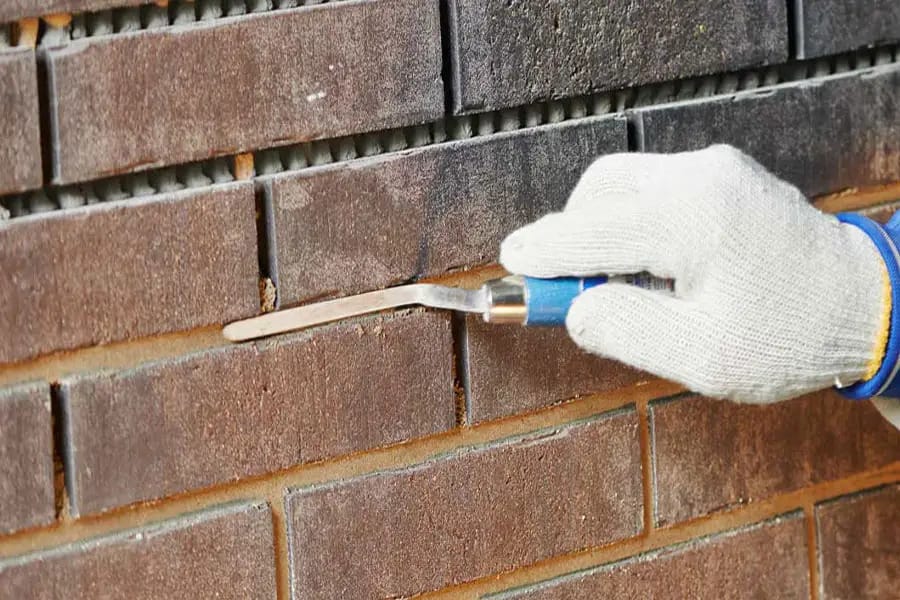
3. Cutting or raking out mortar: Using tuckpoint grinders with vacuum attachments or hand tools, we remove the old mortar to a proper depth, usually 2 to 2.5 times the width of the joint or about 1/2 to 3/4 inch. We do not just skim the surface. This depth is what allows new mortar to lock in and last.
4. Cleaning the joints: We blow out or brush out dust and loose material, then lightly mist the joints with water. This keeps the bricks from pulling moisture too fast out of the new mortar and prevents weak, crumbly joints.
5. Mixing and color matching: We blend sand, cement or lime, pigments if needed, and water to match your existing mortar as closely as possible. On visible front facades in Detroit neighborhoods like Indian Village or Boston Edison, we often mix small test batches and let them dry before committing so the color and texture are right.
6. Packing in new mortar: Using pointing trowels and jointers, we press new mortar firmly into the joint in lifts, making sure there are no voids. For true tuckpointing finishes, we use a base mortar that matches the brick color, then run a fine contrasting mortar line that creates the sharp "penciled" look.
7. Tooling and clean up: Once the mortar starts to set, we tool the joints to match the existing profile (concave, flush, or weathered), brush off excess, then clean any minor haze from the brick surface. Finally, we remove debris, sweep up, and leave the area ready to use.
Material Options, Joint Styles, and Finish Choices
Even though tuckpointing is repair work, you still have decisions to make about appearance and materials. Superior Masonry Detroit explains these options clearly so you get both durability and the look you want.
Mortar type: On most post 1940s Detroit homes, a standard Portland cement based Type N mortar works well for above grade brick. On older or historic masonry we sometimes use lime rich mixes because they are more flexible and breathable, which suits softer bricks. Using a mortar that is too strong for the brick can lead to cracking and spalling around the joint, which is why we match the strength carefully.
Color: We can either blend the new mortar to blend in so repairs are almost invisible, or we can intentionally sharpen the appearance with a slightly cleaner, crisper color. For full tuckpointing with a contrasting line, we typically match the bed of the joint to the brick color, then use a narrow, lighter or whiter mortar strip to create that traditional lined effect. This works especially well on decorative fronts and commercial storefronts trying to restore an older look.
Joint profile: Common profiles we install include concave (slightly rounded and compressed, sheds water well and is popular on Detroit bungalows), flush (flat with the brick surface, often used on modern or industrial style walls), and weathered (slightly sloped to shed water). On chimneys and parapet walls that take a lot of weather, we usually recommend concave joints for maximum water resistance.
Sealants and breathable coatings: In some cases, especially where exposure is extreme like lake facing walls or tall chimneys, we may recommend a breathable masonry water repellent after the mortar has fully cured. These products allow moisture vapor out but limit liquid water absorption. We avoid non breathable sealers on most brick, since trapping moisture in Detroit’s freeze-thaw climate can cause more harm than good.
What Affects Tuckpointing Cost in Detroit
Customers often ask why tuckpointing prices can vary so much from one part of a house to another. Superior Masonry Detroit is upfront about what really drives the cost so you can plan and compare estimates fairly.
Access and height: Work on a single story front porch or low garden wall is much faster and safer to set up than a 35 foot chimney. If we need full scaffolding, roof harnesses, or lift equipment, that time and equipment cost gets reflected in the price.
Extent of deterioration: If the mortar is soft but the bricks are sound, we can focus just on raking and repointing. If bricks are cracked, spalled, or already loose, we may need to remove and reset them before we tuckpoint, which adds labor and sometimes material cost for replacement brick. In Detroit we often have to source reclaimed brick to match older homes, which can affect the budget and schedule.
Area and depth of work: Tuckpointing a few localized sections around a chimney cap is different from repointing every joint on an entire wall. We also never shortcut joint depth, so if an old repair was done too shallow, we have to go deeper to fix it correctly.
Complexity and detailing: True decorative tuckpointing with fine contrasting lines is more labor intensive than standard repointing. Intricate brickwork, arches, and corbeling (stepped out brick details) also take more time and care to reach and repair correctly.
Scheduling and season: Mortar work in Metro Detroit is temperature dependent. We avoid tuckpointing in freezing weather unless we can properly tent and heat the area, since mortar that freezes early will fail. Spring through fall allows more flexibility and sometimes better pricing because we are not adding costs to protect the work from cold.
What Detroit Homeowners Should Know Before Hiring a Tuckpointing Contractor
Tuckpointing is one of those services where it is easy to hide shortcuts. The wall may look decent right after the work, but problems show up a winter or two later. Here is what Superior Masonry Detroit recommends you check before you hire anyone.
Ask how deep they remove the old mortar. Anything less than about 1/2 inch on standard brick is usually a surface patch. You want the contractor to talk in terms of joint width multipliers or specific depth, not just "we clean it out"
Look for dust control and protection. Proper tuckpointing in the city should include vacuum attachments on grinders or a plan for dust containment, along with plastic or tarp protection for windows, vehicles, and landscaping. This is especially important in tight Detroit lots where your neighbor’s car might be only a few feet away.
Discuss mortar matching, not just color. A good mason will talk about mortar type, hardness, and breathability, especially on older brick. If the only concern mentioned is "we will match the color," that is a red flag.
Check licensing and insurance. In Michigan, masonry contractors working on residential structures generally fall under the builder’s license requirements. Ask for proof of licensing and liability insurance, and make sure they are comfortable pulling permits if your project triggers them (larger structural repairs, major chimney rebuilds, or commercial work often do).
Ask for local references and recent projects. A contractor who regularly works in Detroit will know how our weather, salts, and older building stock behave. At Superior Masonry Detroit we can point you to chimneys, porches, and walls we have tuckpointed in your neighborhood so you can see how the joints look after a couple of seasons.
Finally, get a written scope. It should spell out which walls or sections will be tuckpointed, how deep joints will be raked, what mortar type is planned, any brick replacement, and whether washing or sealers are included. Clear details upfront help you avoid surprise add ons once work has started.